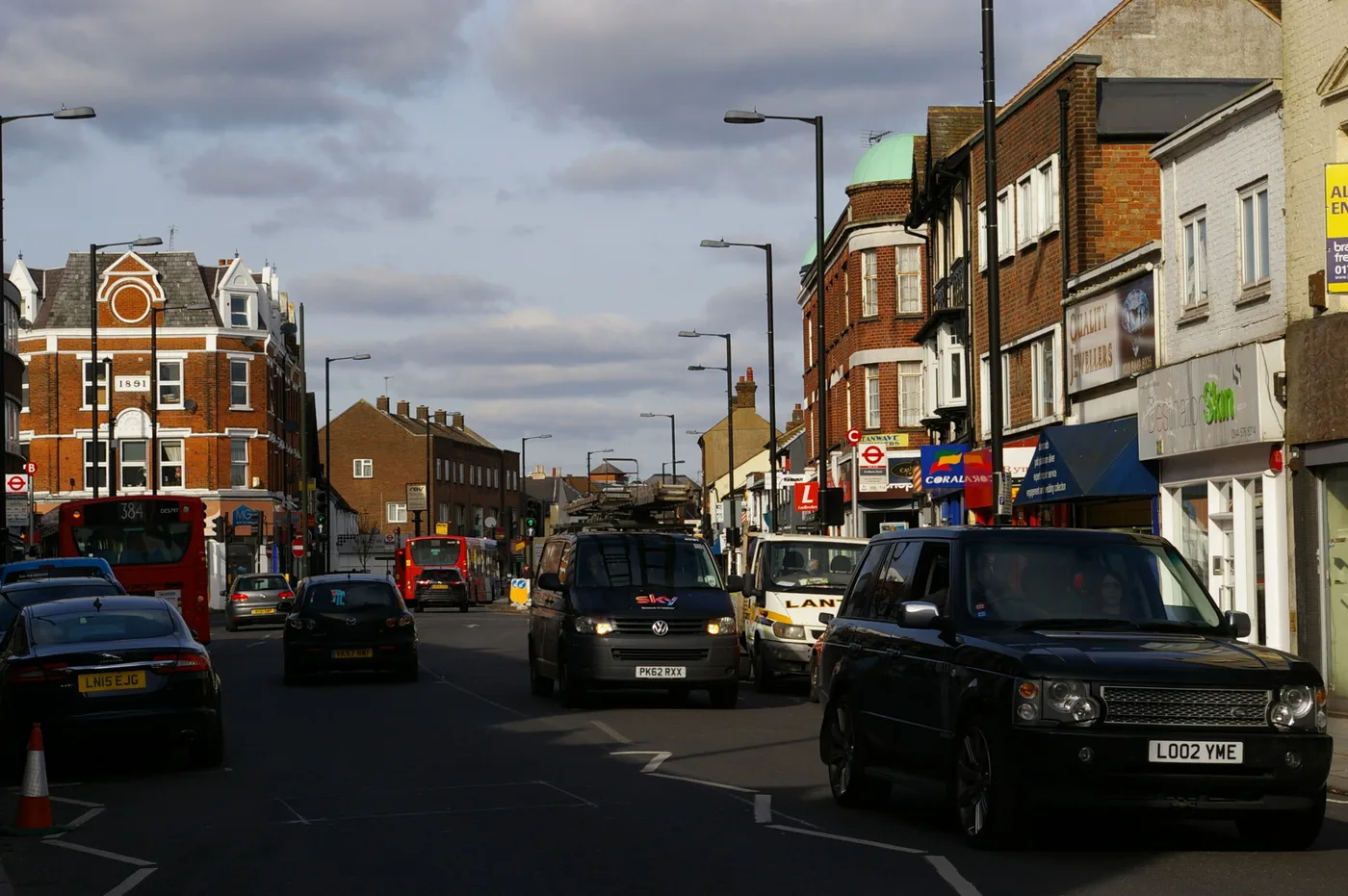

Search Barnet planning applications by postcode on Public Access, free and no login needed. Direct links to the weekly list, appeals, enforcement and building control.
Every one of the Barnet planning applications submitted in the borough goes onto a single public register, free to search, no account needed to look. If a neighbour is extending, a shop is being converted, or a block of flats is proposed at the end of your road, the drawings, the reports and the deadline for comments are all sitting online right now. Most people only find out once the hoardings go up. This page covers where the register is, how to run a Barnet planning search that actually finds the thing you are looking for, how to read the weekly list, how long you get to have your say, and the difference between an objection that counts and one that gets set aside.
Barnet planning search: the direct links
Six separate searches sit on the same council portal, and picking the right one first saves most of the work. None of them needs an account.
| What you want | The search to use |
|---|---|
| One live application near you | Search Applications, by postcode |
| Everything ever applied for at an address | Property Search |
| Everything registered or decided this week | Weekly list, filterable by ward |
| A refusal that went to appeal | Search Appeals |
| Work done with no permission at all | Search Enforcements |
| Whether the build was signed off | Building Control |
Two rules cover almost every failed Barnet planning search. Search the postcode, never the house name, because addresses are typed in by applicants and postcodes come from the council’s own data. And if a search returns nothing, assume a filter is too tight rather than that the application does not exist: Public Access returns a clean empty result for an over-narrow application type or date range, which reads exactly like “this was never submitted”.
Where Barnet planning applications live
Barnet Council runs its register on Public Access, the Idox system used by most English councils:
You do not need to sign in to search or read anything. Type an address, a postcode or a reference number and you get the application form, the drawings, the supporting reports, the case officer, the dates and any comments already submitted. The council’s own route in is its view, search and comment on planning applications online page.
The council’s own instruction is to search by address, postcode or date, and the portal also takes a reference number if you have one from a letter or a site notice. If you only know roughly where the site is, keep the search loose and narrow it from the results list.
The weekly list: everything registered in the last seven days
If you would rather not run the same search over and over, Barnet publishes a weekly list of applications:
Each list covers a week beginning on a Monday, and the dropdown goes back well over a year. You choose whether you want applications validated or decided in that week, and you can filter to a single ward: Barnet Vale, Brunswick Park, Burnt Oak, Childs Hill, Colindale North and the rest of the borough’s wards are all listed separately. It is the fastest way to see what has just landed near you, and it is the habit worth building if you care about a particular street, because a neighbour notification letter does not always arrive.
Email alerts: let the portal watch the street for you
Better still, make the council’s system do the checking. Register for a Public Access account, which is free, then save a search, usually a postcode, a street or your ward, and switch on notifications. Barnet’s own guidance confirms an account lets you get alerts for planning applications and appeals in your area, track applications you are interested in, see how many comments have been made, and find past applications.
One thing that trips people up: the Public Access login is not the same as your Barnet MyAccount login. The council says so explicitly. You need a separate registration for the planning portal.
Running a Barnet planning search that finds it
The plain search box on the portal takes an address, a postcode or a reference, and for most people that is enough. When it is not, the reason is almost always that you are searching for the wrong thing rather than that the application does not exist. Three habits fix most failed searches.
Search the postcode, not the address. House names, flat numbers and “land rear of” descriptions are entered by the applicant and rarely match what you would type. A postcode is entered from the council’s own address data, so it hits. Search the postcode, then pick the site out of the results list.
Use the advanced search when the simple one comes up empty. Barnet’s advanced search lets you search on far more than an address, and it is the tool for the searches people actually want:
- Description keyword, for finding every “loft conversion” or “change of use” in the borough
- Applicant name and agent, for tracking a developer or an architect across sites
- Ward and conservation area, which is the one to use if you care about a whole area rather than one street
- Application type, from advertisement consent to certificates of lawfulness, and Barnet carries its own Brent Cross Specific Application type for schemes inside the regeneration area
- Status, decision, appeal status and appeal decision, so you can list only what was refused, or only what went to appeal
- Date ranges for received, validated, committee, decision and appeal decision dates
If it returns nothing, loosen one filter at a time. On Public Access an over-tight application type or date range returns a clean “no results” rather than an error, which reads exactly like “this does not exist”. Clear the type filter first, then widen the dates, before concluding the application was never made.
For an application that has gone to appeal, the summary tab on the case page carries the appeal status and outcome, so you do not need to go to the Planning Inspectorate separately unless you want the inspector’s decision letter.
Five searches on the same portal, not one
The thing that trips up most a Barnet planning search is that people only ever use one of the five search tools on the portal, and it is usually the wrong one for what they are actually after.
The simple search has three modes, and two of them are hidden in plain sight. The Planning menu offers Search Applications, Search Appeals and Search Enforcements. The enforcement search is the one nobody finds, and it is the right tool when the question is not “has permission been granted” but “has the council been told about work that never had permission at all”.
Property Search answers a different question from the address box. The property search is described on the portal as a search for current or historical cases relating to a property, which is what you want when you are buying a house and need everything that has ever been applied for at that address, not just the live application. It takes a UPRN, a property name or number, street name, locality, town or postcode. Give it a postcode on its own and it will often come back with “Too many results found. Please enter some more parameters”, so add the house number rather than assuming there is nothing there.
The A to Z Street Search is the one to use when you do not know the address. Barnet’s A to Z street search lists every street in the borough under its initial letter, and clicking a street returns every property on it. It is genuinely exhaustive: there are 17 Barnet streets beginning with Q alone, from Quadrant Close in Hendon to Quayle Crescent in Whetstone. If the road name you have is slightly wrong, this is faster than guessing at the address box.
Building control and licensing are on the same portal, not a different one. Alongside Planning, the portal carries a Building Control register and a Licensing register, each with its own simple search, advanced search and map, and building control has its own weekly list. So if the question is whether the loft conversion next door was signed off rather than whether it was permitted, that answer is two clicks away on the same site. When we checked, the building control weekly lists ran back to early June 2026.
Each register has a map view. The map search plots cases geographically, which beats a results list when what you care about is a whole street or a corner of a ward rather than one plot.
How to comment or object
Comments have to go in writing, and the simplest route is straight through the portal. The council sets out four steps: go to Barnet Planning Applications, search by address, postcode or date, register or log in, then add your details and your comment in the comments section.
Two things about publication are worth knowing before you type. Barnet states that all comments submitted are made available online, and your name and address are published with your comment. Phone numbers and email addresses are redacted. The council also says it cannot enter into correspondence or discussion with objectors about the points they raise, so a comment is a submission, not the start of a conversation.
On timing, the deadline that matters is the one shown on the individual application’s page on the portal, and it is also given in the neighbour letter or on the site notice. The national standard is a 21 day consultation period from the point the consultation starts, the statutory minimum across England (Planning Aid guidance on commenting). Check the portal rather than counting from the date you first heard about a scheme, because the clock starts when the council starts the consultation, not when you notice the scaffolding.
What actually counts, and what does not
This is where most objections are lost. A planning decision can only turn on material planning considerations. Barnet applies its Local Plan, government guidance and other material considerations, and says it will weigh comments according to seriousness and relative importance.
The council’s own published list of what counts:
- loss of light or overshadowing
- overlooking and loss of privacy
- visual amenity, but not loss of a private view
- adequacy of parking, loading and turning
- traffic generation, highway safety and parking
- noise and disturbance from the use
- loss of trees
- effect on a listed building or conservation area
- layout and density of building
- design, including height, bulk, position, appearance and materials, and the effect on the surrounding area
- landscaping and road access
- local, strategic, regional and national planning policies
- previous planning decisions, including appeal decisions
- nature conservation
And what the council states it cannot take into account:
- the perceived loss of property value
- private disputes between neighbours
- the loss of a view
- the impact of construction work, or competition between firms
- matters covered by other legislation, including restrictive covenants on land
- ownership disputes over rights of way
- the applicant’s motives, character or personal circumstances
What it means for you: the same worry can be worth a lot or nothing depending on how it is framed. “This will make my house harder to sell” carries no weight. “The three-storey rear extension will overshadow my kitchen window and remove afternoon light from the garden” is a material consideration the case officer has to address. Write it in the council’s language, be specific about which window, which room and which hour of the day, and cite the Local Plan policy if you can find it.
Barnet consults on applications in line with its Statement of Community Involvement, agreed by the council’s Cabinet in September 2025, which sets out who gets told about what.
Before you apply: permission, advice and enforcement
If you are the one building rather than the one objecting, three council pages do most of the work. Do I need planning permission? is the first stop, because a lot of domestic work is permitted development. Planning permission: making an application covers Barnet’s validation requirements and fees, and there is pre-application advice for anything substantial plus a paid Fast Track service that speeds up administration and review.
Trees are the trap. It is a criminal offence to work on a protected tree without consent, and the council explains how to check and apply on its protected trees page. Larger schemes may also owe the Community Infrastructure Levy.
If work is happening that you think has no permission, or breaches a condition, that is enforcement rather than a comment on a live application, and it goes through the council’s report a planning breach form.
The bigger picture: the Local Plan and the big sites
Individual applications are judged against the Barnet Local Plan 2021 to 2036, which sets the council’s vision for growth over a fifteen year period and is the document that decides where development can go in the first place. It is under review, and the council also maintains a brownfield land register of previously developed sites.
Two borough-scale schemes sit outside the ordinary run of applications. Brent Cross Cricklewood is Barnet’s largest regeneration area, covering Cricklewood, Brent Cross and West Hendon. And North London Business Park in Brunswick Park went to a planning public inquiry under appeal reference APP/N5090/W/23/3330577, with the council publishing the core documents in full. Anyone wanting to understand how a contested Barnet scheme is argued will find the whole evidence base there.
Barnet has also made an Article 4 Direction on small houses in multiple occupation, which removes permitted development rights for converting a house into a small HMO, so those conversions now need a full application and appear on the register like anything else.
Frequently asked questions
Which Barnet planning search should I use?
For a live application near you, the simple Search Applications box with a postcode. For the full history of one address, including anything refused or withdrawn, the Property Search. For a sweep of the whole borough by keyword, ward, applicant or decision, the advanced search. For “what has just landed on my street”, the weekly list filtered to your ward. All six searches, plus the appeals, enforcement, building control and licensing registers, sit on the same portal and none needs a login to read.
Can I search Barnet building control and enforcement records too?
Yes, and they sit on the same Public Access portal as planning. The portal carries three registers, Planning, Building Control and Licensing, each with its own simple search, advanced search, map and, for building control, its own weekly list. Under Planning there are also separate searches for appeals and for enforcement cases, and the enforcement one is the register to use when you want to know whether the council has been told about work carried out without permission. The property search covers current and historical cases at a given address, which is the one to run before you buy.
How do I find planning applications in Barnet?
Search the council’s Public Access portal at publicaccess.barnet.gov.uk/online-applications by address, postcode or reference number. No account is needed to view. The weekly list shows everything registered or decided in a given week.
What is the Barnet planning portal?
It is the council’s online planning register, branded Public Access and run on the Idox system. Residents sometimes call it the Barnet planning portal; it is the same free system at publicaccess.barnet.gov.uk, and it holds the drawings, reports, case officer and comment deadline for every application.
How long do I have to comment on a Barnet planning application?
The deadline is shown on the application’s own page on the portal, and in the neighbour letter or site notice. The national standard consultation period is 21 days from when the consultation starts.
Are comments on Barnet planning applications made public?
Yes. Barnet states that all comments are made available online and that your name and address are published with your comment. Phone numbers and email addresses are redacted.
Do I need a separate login to comment on Barnet planning applications?
Yes. The Public Access account is a different login from Barnet MyAccount. Register once on the planning portal and you can also save searches, get email alerts for new applications in your area, and track individual cases.
What reasons will Barnet actually consider in an objection?
Loss of light, overlooking and loss of privacy, parking and highway safety, noise, loss of trees, effect on listed buildings and conservation areas, design, density, landscaping and conflict with planning policy. Property values, private disputes, loss of a view and the applicant’s character are all excluded.
Sources
- Barnet Council, view, search and comment on planning applications online, for the portal route, the account requirement, the publication rules and the material considerations lists
- Barnet Public Access planning portal and the weekly list
- Barnet Council, planning applications and permissions and statement of community involvement
- Barnet Council, planning policies and Local Plan and the North London Business Park public inquiry core documents
- Planning Aid, how to comment on a planning application, for the 21 day consultation period
Checked against Barnet Council’s planning pages and the Public Access portal on 4 August 2026; the portal’s search fields re-checked on 20 August 2026, and the property, A to Z street, appeal, enforcement, building control and licensing searches re-checked on 27 August 2026 and the portal re-checked on 6 September 2026. Deadlines and statuses change daily, so confirm on the portal before relying on a date. Related: Barnet planning news, parking in Barnet, Barnet council tax bands and Barnet bin collection days.
Have your say