
£70m of Barnet's £200m plan would come from a council tax rise above the 5% cap. Scrutiny meets 8 October, Cabinet 12 October; a residents' survey is open.
Barnet Council has published its plan to close a budget gap it forecasts will reach £198 million a year by 2029/30. The single biggest item in it is council tax.
Of the £84 million the council has identified so far, about £70 million would come from a council tax rise modelled above the usual legal cap. That rise has not been approved. It would need the agreement of the Secretary of State and of councillors.
The document, Our Plan for Financial Sustainability 2026-29, was published on Friday 2 October. The council said in its announcement that “no decisions have been made” yet.
The numbers
The plan sets a target of £200 million in recurring savings and extra income by 2029/30, slightly above the forecast gap. The gap grows every year without action:
| Year | Forecast gap before the plan |
|---|---|
| 2026/27 | £79.3m |
| 2027/28 | £113m |
| 2028/29 | £149m |
| 2029/30 | £198m |
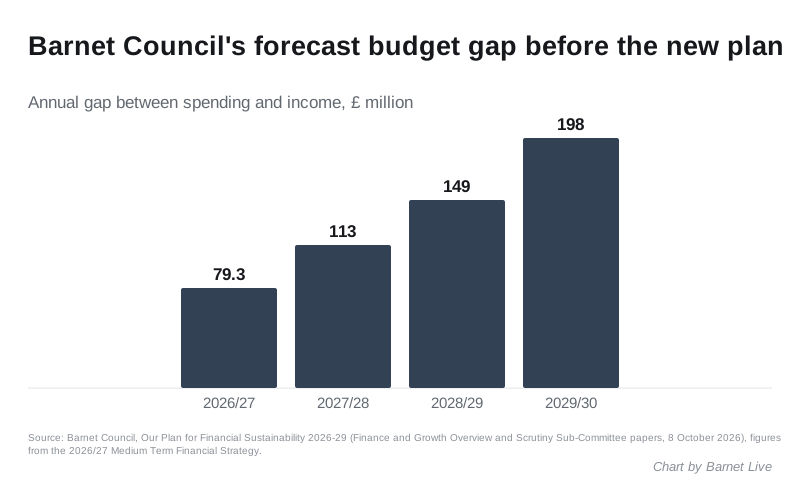
Over the three years to 2029/30, the plan forecasts spending rising by £209 million and income by only £83 million. It names four pressures behind that, by 2029/30:
- £56m from pay and price inflation, with care and temporary housing costs rising faster than general inflation
- £40m in financing costs on the emergency borrowing the council has already taken
- £32m from more residents needing social care, and needing more of it
- £16m from homelessness and the cost of temporary accommodation
The council says these overlap, so they do not add up exactly to the total.
Only about £18 million of the council’s £544 million budget for 2026/27 is spent on services it is not legally required to provide, the plan says. Cutting all of it would barely dent the gap. Cllr Simon Radford, Cabinet Member for Financial Sustainability, made the same point in the council’s announcement.
Council tax is the plan’s biggest lever
The government assumes a Band D council tax of £2,060 when it works out how much Barnet can raise locally. Barnet’s own charge is £438 lower, the plan says. That matches this year’s figure: the council’s share of a Band D bill in 2026/27 is £1,622.09, as we set out in our report on the CIPFA review.
The funding system treats Barnet as if it collected the higher amount. The council’s announcement puts the shortfall at £74 million a year and says its rate is 32% below the government’s average. The council did not show how it reached 32%. On the plan’s own figures, Barnet’s charge is about 21% below £2,060.
The usual limit on a rise is 4.99% a year for Barnet: 2.99% general and 2% for adult social care. A separate Cabinet report on the budget says going higher would need either a local referendum or special permission from the government. It says the council is in talks with the Ministry of Housing, Communities and Local Government. Decisions are “unlikely to be known until late 2026/early 2027”.
Any rise would also cost more in the Council Tax Reduction Scheme, which helps lower-income households pay. The £70 million figure is after that cost. The plan also lists a review of the scheme itself.
Every band for this year is in our Barnet council tax bands guide.
Bins, libraries and the Duke of Edinburgh Award
The council’s announcement says the plan includes “looking at alternating waste collections, in line with many other London boroughs”. Cabinet asked for an options appraisal on bin collection frequency on 15 September. No change has been decided.
The plan and the budget papers that go with it list other work at an early stage:
- a strategic needs assessment for libraries, logged as an “idea”, with any savings “to be assessed”
- a review of which services the council provides above the legal minimum
- an asset plan to sell property and cut borrowing
- a review of fees and charges, and more targeted debt collection
- reconfigured waste collection rounds, to save £1 million in 2029/30 and £1 million in 2030/31
- ending the council’s Duke of Edinburgh Accreditation Service, which the papers say runs at an annual deficit of £192,000
- surrendering the lease on the RAF Museum customer car park, saving £50,000
- letting a third floor of the council’s Colindale offices, for £200,000
The last four are in the savings and income proposals for 2027 to 2032. Those total £21.2 million over five years, of which £7.9 million falls in 2027/28.
Emergency borrowing will still be needed
Barnet has applied for £135 million in Exceptional Financial Support over the past two years. That is government permission to borrow, or to use money from selling assets, to cover day-to-day costs. It was £55.7 million in 2025/26 and £79.6 million in 2026/27, according to the council’s notes to editors.
The new plan does not end that quickly. It says this support “is likely to remain necessary in 2027/28 and potentially 2028/29”. The Cabinet budget report puts the gap for 2027/28 at £113.5 million, even after this year’s proposed savings. It says the council will have to apply for more emergency support to balance that year.
The council says it has made progress. It used about £10 million less emergency support last year than ministers approved, and delivered 95.8% of its planned savings. It says adult social care now costs less than the national average per adult.
Cllr Radford said: “We need to make some very painful decisions in the coming months and years, and to have a brutally honest conversation with residents.”
What it means for you
Nothing changes yet. The plan is a framework, and each proposal will go through its own decision and, where needed, consultation. But it is clear about direction: a council tax rise above the cap is the largest single item, and fortnightly bins are being looked at.
The dates to know:
- Thursday 8 October, 7pm: the Finance and Growth Overview and Scrutiny Sub-Committee examines the plan. The papers are public.
- Monday 12 October, 7pm: Cabinet is asked to approve it.
- Monday 26 October: an online Barnet Question Time budget special, where Cllr Radford and the Cabinet take residents’ questions.
- December: the budget proposals that go out to formal public consultation go to Cabinet.
- 23 February 2027: Cabinet sets its final budget recommendation.
- 2 March 2027: Full Council sets the 2027/28 budget and council tax.
You can give early views now in the council’s short survey, on its budget engagement page. That page also breaks down where the council’s money comes from and where it goes.
One practical change has already happened. From 1 October, Liberata took over the council’s revenues and benefits service, which handles council tax collection, according to the Cabinet budget report.
Have your say