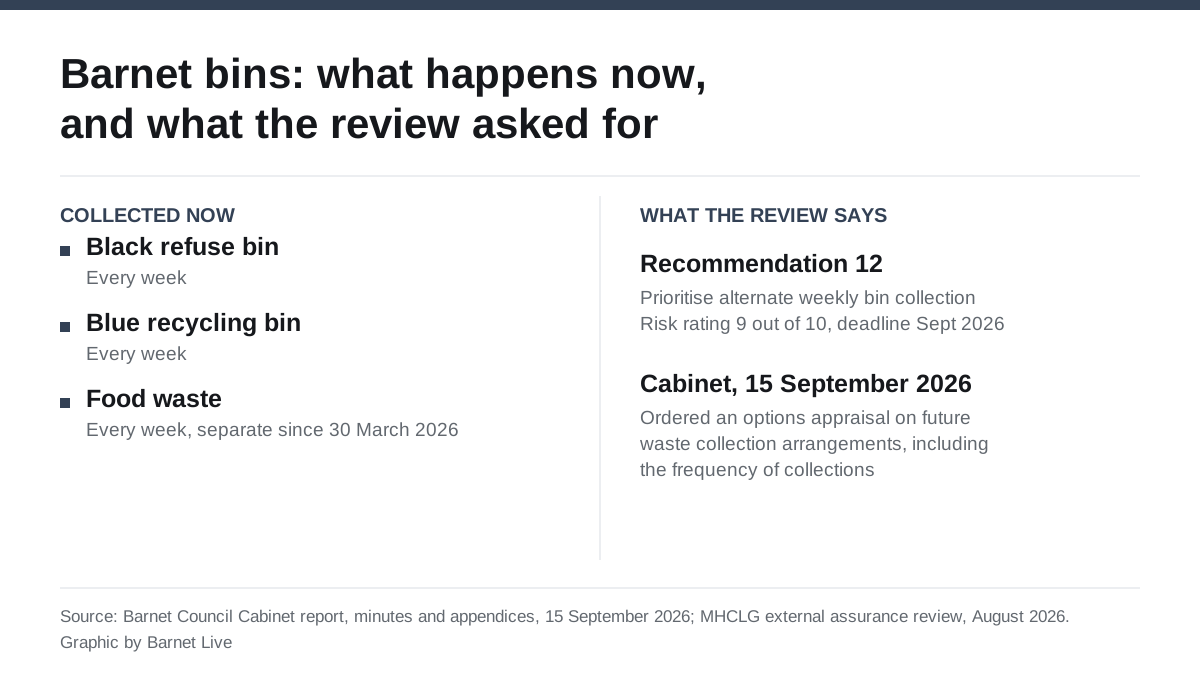

Cabinet ordered the appraisal from the floor on 15 September, after a government review told Barnet to prioritise alternate weekly bins this month.
Barnet Council has told its officers to work up an options appraisal on how often household bins are collected, the first formal step towards a change that a government-commissioned review said it should prioritise by this month.
The instruction was not in the report officers put before Cabinet on Tuesday 15 September. It was added during the meeting. The published minutes record that “following debate, Cabinet agreed an additional decision to address the CIPFA recommendation relating to future waste collection arrangements”.
The decision as minuted asks officers to work on an options appraisal:
including the use of any specialist advisors/consultants as required, for future waste management collection arrangements (including the frequency of collections) in line with the CIPFA recommendations.
No date, no consultation and no preferred option were attached to it.
What Barnet collects now
Barnet still empties two wheeled bins every week, plus food waste.
- the black refuse bin, weekly
- the blue recycling bin, weekly
- food waste, weekly, separately collected since 30 March 2026
Alternate weekly collection, the arrangement the review pointed at, would mean one of those bins being emptied every other week instead. Our Barnet bin collection days page sets out the current rounds.
Where the recommendation came from
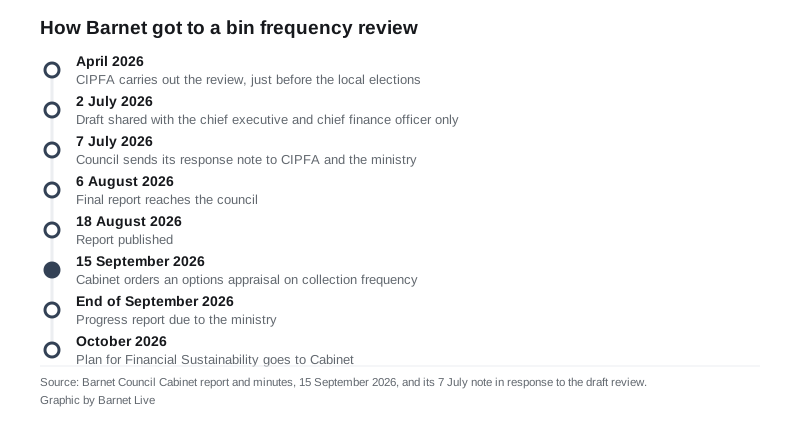
The push is not the council’s own. CIPFA carried out an external assurance review of Barnet’s finances for the Ministry of Housing, Communities and Local Government, as a condition of the exceptional financial support the council is relying on. The report was published on 18 August 2026 and we covered its contents at the time in our report on the review.
Recommendation 12 carries a risk rating of nine out of ten and a deadline of September 2026. It tells the council to prioritise a smaller number of high-impact reforms focused on its largest cost and demand drivers, naming four:
- temporary accommodation reduction
- placement sufficiency in children’s services
- package-level demand and cost management in adult social care
- alternate weekly bin collection
The risk it is answering, as the report puts it, is that demand and market pressures in those services “continue to outpace transformation delivery, resulting in ongoing reliance on EFS and weakening financial resilience”.
Councillors had already asked for it
The council’s own note in response to the draft review, written on 7 July and published for the first time with Tuesday’s papers, shows the question was already live inside the town hall.
Pushing back on CIPFA’s description of a “cautious leadership culture”, the chief executive and chief finance officer wrote that “elected Members had specifically asked that issues relating to Council Tax, alternate weekly waste collection and school closures were considered in the 2026/2027 Administrative Year”.
That is the council recording, in a document sent to CIPFA and the ministry, that its own members had put fortnightly bins on the table before the review reported.
What happens next, and when
- End of September 2026: the chief executive and section 151 officer submit a progress report to the ministry on all 18 recommendations. Cabinet authorised that on 15 September.
- October 2026: Our Plan for Financial Sustainability goes to Cabinet.
- After that: progress on the recommendations is reported through the chief finance officer’s quarterly report, rather than as a standalone item.
The options appraisal itself has no published timetable.
What it means for you
Nothing changes on your collection day yet. An options appraisal is a piece of work, not a decision, and the council has not said which options it will look at, what it would cost to switch, or whether residents would be consulted first.
What has changed is the direction. Until Tuesday the only thing on the record was an external recommendation the council had not formally responded to. Now the council has instructed its own officers to cost the alternatives, including frequency, and it has done so under a ministry deadline it has to report against at the end of this month.
Two things are worth watching. The first is whether the appraisal appears as a public Cabinet paper or arrives folded into the quarterly finance report, which would give it far less scrutiny. The second is the consultation question: the decision as minuted says nothing about asking residents, and a change to collection frequency is the kind of service change that usually triggers one.
If you want to see the paperwork yourself, the agenda, reports and minutes for the 15 September Cabinet are on the council’s committee site, and our Barnet bin collection days page will be updated if and when anything actually changes.
Sources
- Barnet Council, Cabinet agenda, reports and minutes, 15 September 2026, item 9, MHCLG External Assurance Review, including the minuted additional decision on waste collection
- Cabinet report, MHCLG External Assurance Review, 15 September 2026, for the 18 recommendations, their risk ratings and deadlines, and the end-of-September reporting requirement
- Appendix B, LB Barnet notes in response to the CIPFA draft review, 7 July 2026, for the passage on what elected members had asked to be considered in 2026/27
- Appendix A, Barnet External Assurance Review 2026
Have your say