
Barnet's SEND budget is forecast £17.2m over, wiping out its schools reserve. 42 of its 71 council-run primary schools expect to end the year in deficit.
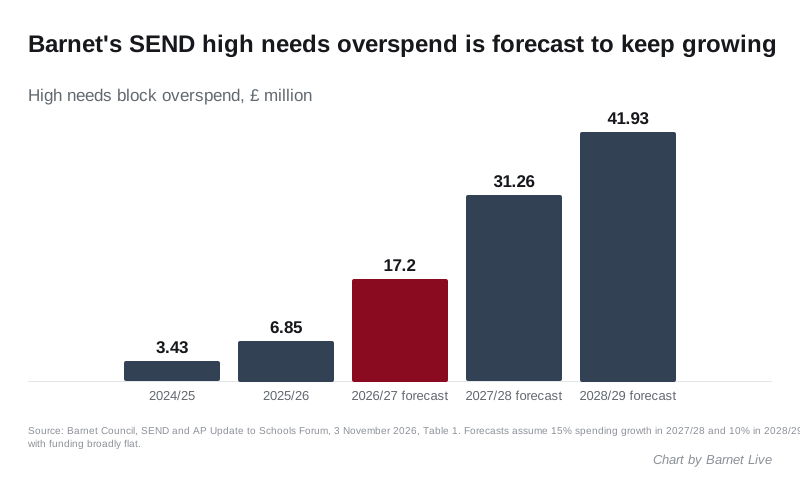
Barnet’s budget for children with special educational needs is forecast to overspend by £17.2 million this year. That is two and a half times last year’s overspend, and it will use up the whole of the borough’s schools reserve.
The figures are in the papers for Barnet’s Schools Forum, which meets online at 4pm today, Tuesday 3 November. The forum is the body of head teachers and governors that the council must consult on school funding.
The same papers show the money running out inside schools too. 42 of Barnet’s 71 council-maintained primary schools are forecasting a deficit this year, between them £15.6 million in the red.
The council’s forecast
The high needs block is the part of the government’s schools grant that pays for pupils with special educational needs and disabilities (SEND). Barnet’s is £80.07 million this year. The council forecasts spending £97.26 million.
The overspend is not new, but it is growing fast:
| Year | High needs overspend |
|---|---|
| 2024/25 | £3.43m |
| 2025/26 | £6.85m |
| 2026/27 (forecast) | £17.20m |
| 2027/28 (forecast) | £31.26m |
| 2028/29 (forecast) | £41.93m |
The later forecasts assume spending keeps rising by 15% next year and 10% the year after, while the grant stays almost flat. The council says the grant rose by about 5% this year, but mostly because other grants were folded into it.
Where the money is going
The month 6 forecast, in the Schools Forum pack, breaks the overspend down:
- £8.4 million over on top-up payments to Barnet’s maintained and special schools
- £5.15 million over on places at independent special schools
- £1.1 million over on place funding for special schools, resource bases and pupil referral units
- £2 million across the rest of the budget
Independent and non-maintained special schools are the biggest risk, the paper says. Barnet spent £3.8 million on them in 2021/22. This year it expects to spend about £10.5 million. More than 60 new independent placements have been agreed since April, at an expected £2.5 million to £2.6 million a year.
Placements costing more than £70,000 a year have risen from 21 in 2021/22 to 88 this year. The average independent placement has gone from about £40,000 to about £55,000.
More children with plans
The number of education, health and care plans (EHCPs) held by Barnet residents rose from 2,372 in 2019 to 4,840 in 2026, the paper says. That is a 104% rise, against 103% across England and 82% across London. Of Barnet residents aged 0 to 25, 3.7% now have a plan.
New plans are coming faster this year. The council projects 886 new EHCPs in 2026, up 19.4% on 759 in 2025. It also points to families moving into the borough with existing plans and more appeals to the SEND tribunal.
The reserve runs out
Barnet began this year with £4.41 million left in its schools grant reserve. The forecast overspend uses all of it and leaves a £12.76 million deficit at the end of March 2027.
That matters because of how the government’s rescue for SEND deficits works. Councils whose schools grant was in deficit get help writing it off. Minutes of the forum’s June meeting record that Barnet did not qualify, because its overall schools budget was not in deficit. Members asked then whether the write-offs would continue once Barnet went into deficit. The answer was “possibly”, with the percentage unconfirmed, and the forum was to be told once the Department for Education confirmed it.
When government approved Barnet’s SEND reform plan in October, we reported the high needs pressure at about £6 million. The new forecast is nearly three times that.
Inside the schools
A separate paper looks at the balances of the schools the council still runs, which excludes academies. Together they were £0.4 million in deficit in March. By the end of this year they forecast a £9.2 million deficit.
- Primary: 42 of 71 schools forecast a deficit totalling £15.61 million; 28 have surpluses totalling £5.01 million. Overall, primaries go from £2.91 million in the red to £10.60 million.
- Secondary: 2 of 6 forecast a deficit, totalling £0.92 million.
- Special schools: all three are in surplus, £0.61 million between them.
- Pupil referral units: Northgate is £0.15 million in deficit; Pavilion has a £0.42 million surplus.
The paper names rising staff costs, falling rolls, old buildings and energy prices. The council says it is asking schools in deficit for licensed recovery plans, and runs a Schools in Financial Difficulty panel with Barnet Education and Learning Service.
What the council is doing
The SEND paper lists the council’s response. It includes:
- more local specialist places, through resource bases, satellite units and bigger special schools
- tighter scrutiny of high-cost placements and fee negotiation with independent providers
- local alternatives to costly tuition and education outside school
- more in-house therapy, so fewer therapists are bought in
It has also decided not to take part in a further government trial of handing high needs money to clusters of schools. A pilot found the clusters useful for advice and problem-solving, but “not yet viable” as a way of sharing out funding.
What it means for you
- If your child has an EHCP or is being assessed, nothing in these papers changes your legal rights. The council must still provide what a plan sets out.
- If your child is at a council-run primary, most of them are now budgeting for a deficit. Governors’ minutes and the school’s newsletters are where any cuts would show first.
- The forum meets online today at 4pm. The joining details are printed on the front page of the pack.
- The council’s own budget is under strain too. See our report on its £200m financial sustainability plan and on council tax bands.
Have your say