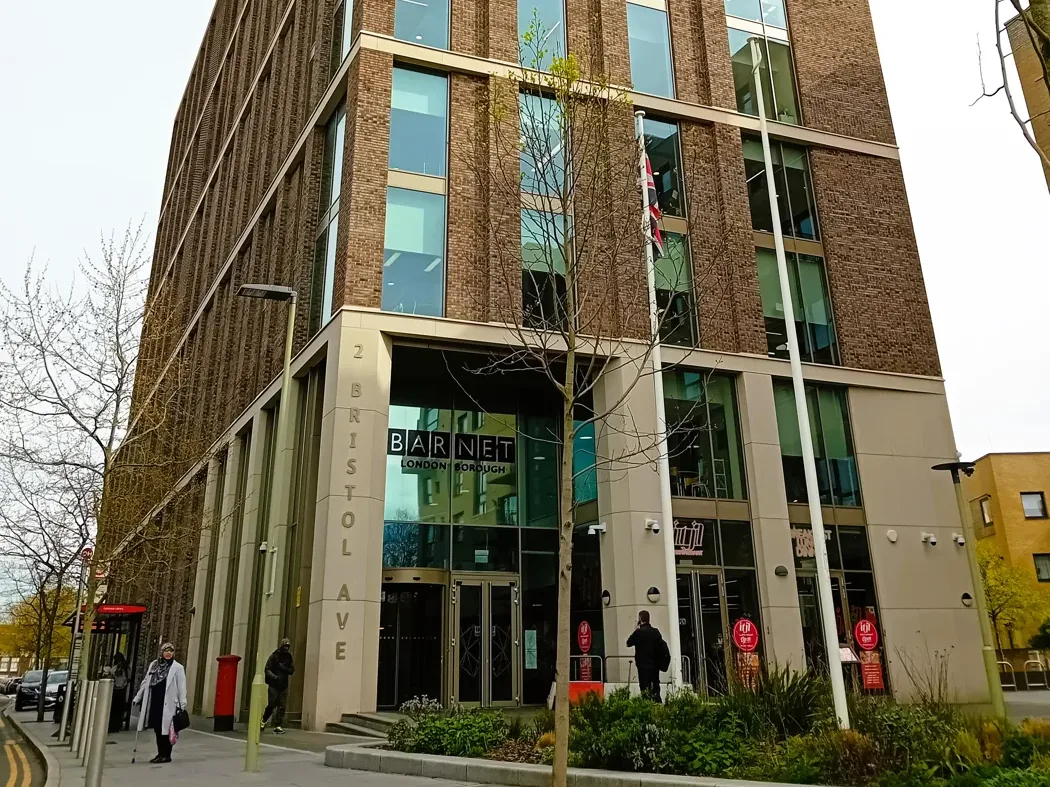

Barnet Council has written off £576,975 of council tax spread across 1,795 small debts, some dating from 2009. Most were judged too costly to chase.
Overview
Barnet Council has written off £576,975.47 of unpaid council tax. The sum is made up of 1,795 separate debts, each under £5,000, with bills dating back as far as 2009. Three quarters of it, £431,316.96, was judged uneconomical to pursue.
The council tax sits inside a larger write-off of £870,220.17, which also clears old Housing Benefit overpayments and other money owed to the council.
What was decided
The council’s chief finance officer approved the write-off on Monday 16 November. It is recorded in an officer decision report titled “Under £5,000 Write Offs Q1 2026/27”. Officers can write off individual debts of up to £5,000 under the council’s financial rules. Larger debts go to Cabinet.
The £870,220.17 total breaks down as:
| Type of debt | Amount written off | Years covered |
|---|---|---|
| Council tax | £576,975.47 | 2009 to 2025 |
| Housing Benefit overpayments | £283,122.60 | 2011 to 2026 |
| Accounts Receivable (other money owed to the council) | £10,122.10 | 2017 to 2026 |
The council says the debts are “uncollectable for reasons provided in this report”. The individual council tax debts are listed in the report’s Appendix B. There are 1,795 of them, so the average is about £321. The appendix gives a reason and an amount for each, with no names.
Why the council tax was written off
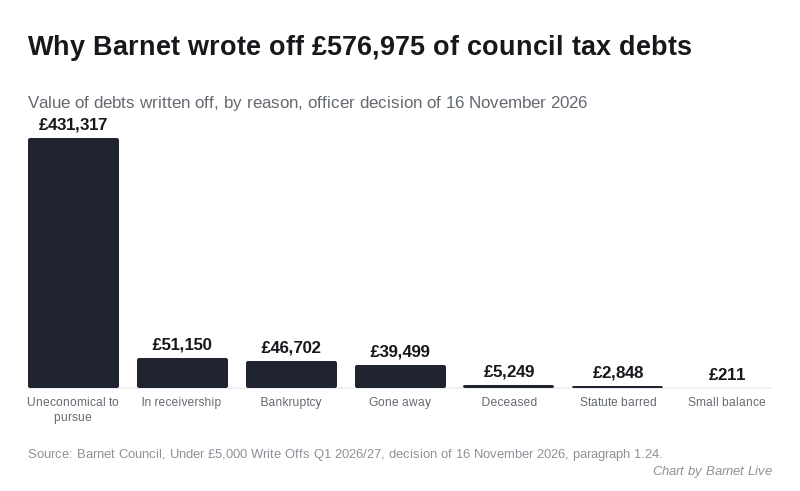
The report gives a reason code for every debt. “Uneconomical to pursue” means the cost of chasing the debt is likely to be more than the debt itself.
| Reason | Amount |
|---|---|
| Uneconomical to pursue | £431,316.96 |
| In receivership or administration (companies) | £51,149.84 |
| Bankruptcy | £46,702.06 |
| Gone away | £39,498.93 |
| Deceased | £5,248.73 |
| Statute barred (more than six years since last demanded) | £2,848.24 |
| Small balance (under £100) | £210.71 |
Most of the money is recent. Bills from 2021 to 2024 account for £364,073.87 of the total, according to the report’s year-by-year table. The single biggest year is 2024, at £124,174.65. The report says this is because some accounts run over several years and were closed this financial year.
The total includes £44,072.38 of court costs that magistrates had already awarded against people who did not pay.
A change in how benefit deductions are used
One part of the write-off is not about giving up. The report covers 273 older council tax debts, worth £93,449.83, that were waiting to be recovered through an Attachment of Benefit. That is a deduction taken straight from a person’s benefits.
Only one such deduction can run on an account at a time, and the amounts allowed are small. The report says it “can take many years” before an older debt reaches the front of the queue.
The council has written off those older balances and pointed the deductions at the most recent year’s bill instead. The report says these write-offs “do not reflect an inability to recover”. It calls them “a strategic realignment of recovery action” meant to stop new arrears building up.
Housing Benefit overpayments
The £283,122.60 of Housing Benefit overpayments covers years from 2011 to 2026. The biggest reasons given are:
- debtors who could not be traced: £91,294.39
- Discretionary Housing Payments the council could not recover: £88,840.22
- claimants who had died: £48,268.71, across 56 invoices
- the council’s own errors: £15,509.32
The report says Discretionary Housing Payments are awarded to “vulnerable residents in severe financial hardship”, so recovery is “negligible”. It says the overpayments caused by council error were fully covered by government subsidy, at no extra cost to the council.
A further £13,007.24 is written off because details did not transfer when the council moved to a new benefits computer system.
Does it cost residents more?
The report says no. All of the debts were already covered by the council’s bad debt provision, which is money set aside in advance for debts that will never be paid. That provision stands at £24,150,729 for council tax and £17,695,298 for Housing Benefit overpayments.
Because the money was already set aside, the report says there is “no anticipated impact” on the council’s medium-term budget.
What it means for you
- A written-off debt can come back. The report says that if someone is traced after the write-off, the debt is reinstated and the council tries again to collect it, within the legal time limits.
- Your own bill is unchanged. The write-off does not alter this year’s charges. You can check what your home pays on our Barnet council tax bands page.
- Collection is slipping slightly this year. By the end of September the council had collected 51.90% of this year’s council tax, down on a year earlier, according to its half-year budget report.
- If you are struggling to pay, contact the council’s council tax team before a bill reaches the courts, as court costs are added to the debt.
Have your say