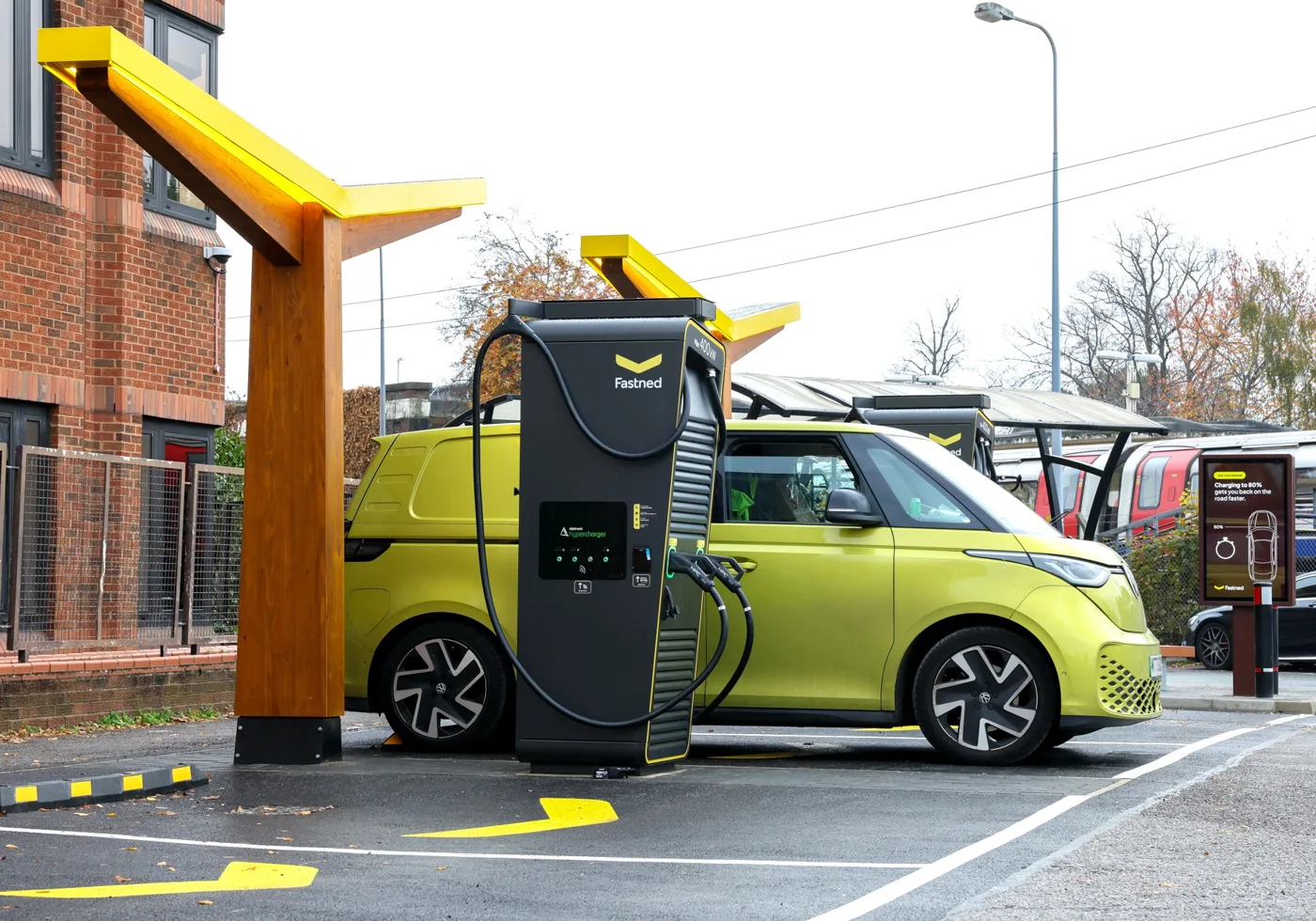

An ultra-rapid EV charging hub with eight 400kW bays is open in East Finchley station car park on High Road, run by Fastned with TfL's Places for London.
An ultra-rapid charging hub for electric vehicles has opened in the car park of East Finchley Underground Station on High Road. It has eight bays and 400kW chargers, which Transport for London says can add up to 100 miles of range in five minutes to a compatible vehicle.
The hub is run by a joint venture between the charging company Fastned and Places for London, TfL’s property company. It opened earlier this month and is the venture’s second site in London, after Hatton Cross near Heathrow Airport, which opened in April 2026.
Overview
- Where: East Finchley Underground Station car park, High Road, on the Northern line’s High Barnet branch.
- What: eight ultra-rapid charging bays with 400kW chargers.
- Speed: up to 100 miles of range in five minutes for compatible vehicles, according to TfL.
- Who runs it: Fastned, in a joint venture with Places for London.
- Power: TfL says all the venture’s sites run on 100 per cent renewable energy.
What the East Finchley hub has
TfL says the hub took eight months to deliver, from planning consent to opening. It is the first of the venture’s sites to have Fastned’s yellow solar “wings” over the bays.
The release says the venture’s hubs have extra-wide bays, clear sightlines and lighting, multilingual support around the clock, and fully accessible spaces in line with British Standards Institution guidance.
According to TfL, the first hub at Hatton Cross supported more than 1.1 million zero-emission kilometres in its first six months.
Why charging matters in Barnet
TfL’s figures show that 64 per cent of households in outer London, which includes Barnet, have no off-street parking, against 93 per cent in inner London. The figures come from TfL’s Travel Demand Survey. For drivers without a driveway, public charging is the main way to run an electric car.
Tom Hurst, UK Country Director at Fastned, said: “We are building real momentum across London. In less than a year, we’ve proven that well-designed, ultra-rapid charging changes the game for drivers. With Hatton Cross answering a critical local demand, East Finchley now welcoming drivers, and our game-changing 36-bay Hanger Lane flagship taking shape, we’re showing what the future of urban charging looks like.”
He added: “Drivers want fast, reliable, safe charging that fits naturally into their day.”
Seb Dance, Deputy Mayor for Environment and Energy, said: “From Hatton Cross to East Finchley, and with monumental sites like Hanger Lane coming soon, this roll-out is vital for the thousands of drivers who don’t have access to a driveway.”
Where the network goes next
The venture has nine planning consents, with decisions awaited on three more. Construction is due to start in 2027 on at least five sites, adding 66 bays and taking the network to eight sites and 122 bays:
| Site | Bays |
|---|---|
| West Barking | 18, with a retail unit |
| Dagenham Dock | 16, with a retail unit |
| Hillingdon (station car park) | 12 |
| Redbridge (station car park, off the A406) | 12 |
| Hounslow East (station car park) | 8 |
Work is also under way at Hanger Lane in Ealing, on the North Circular, which TfL says will be London’s largest ultra-rapid charging site when it opens in spring 2027, with 36 bays, a shop, toilets and outdoor seating.
The partners aim to have up to 25 hubs across London by 2030. That supports the Mayor’s target of 40,000 charge points in the capital by the same year.
John Colgan, Electric Vehicle Charging Hubs Programme Manager at Places for London, said: “By unlocking TfL’s estate, we are transforming accessible land into critical, sustainable infrastructure where the capital needs it most.” He said every new bay “generates revenue to be reinvested directly back into London’s transport system”.
London’s charger numbers
TfL says London has more than 29,500 public charging devices, around a third of the UK’s total, including more than 2,000 rapid or ultra-rapid ones. It expects between 860,000 and 1,049,000 electric vehicles on London’s roads by 2030, between 29 and 36 per cent of the city’s car and van fleet, and estimates that around 43,000 to 51,000 more charge points will be needed.
Source: Transport for London press office.
Have your say