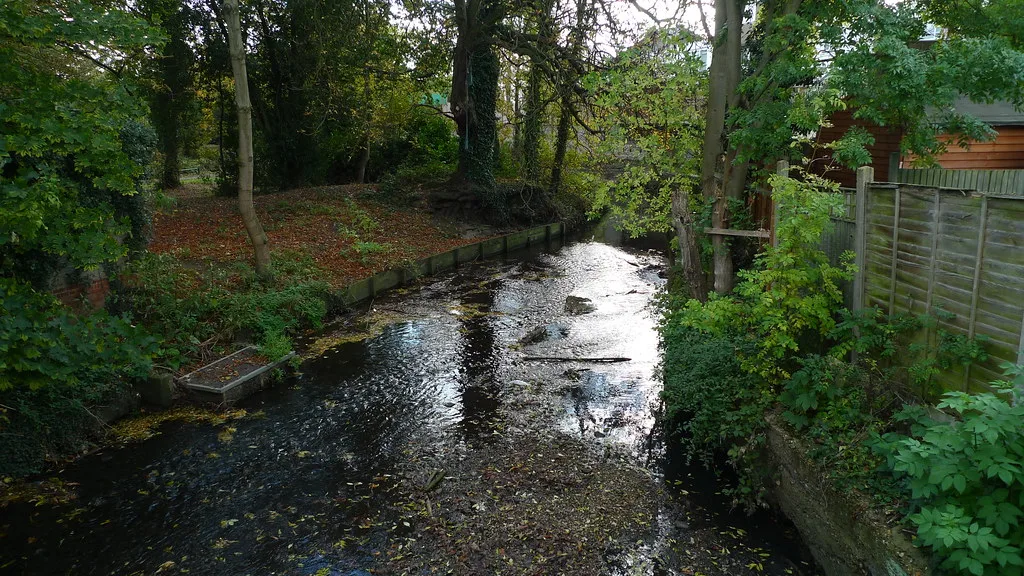

Barnet Council has won £100,000 from the Mayor's Green Roots Fund to restore 5km of the Dollis Brook. The next round is open to groups until 14 January 2027.
Overview
The London Borough of Barnet has been awarded £100,000 from the Mayor of London’s Green Roots Fund for the Dollis Brook Restoration Project, which will improve a 5km stretch of the brook. City Hall says the work will return the river to a more natural state to slow its flow and help prevent flooding, remove invasive species and study whether water voles could be reintroduced. The next round of the fund is open to organisations and community groups until 14 January 2027.
Barnet Council is getting £100,000 from City Hall to restore 5 kilometres of the Dollis Brook. It is the only Barnet project among 28 community schemes sharing £2.6 million in the third round of the Mayor’s £12 million Green Roots Fund, announced on Tuesday 24 November.
City Hall describes the Dollis Brook as a tributary of the River Brent that runs through Barnet. The borough’s own long walk, the Dollis Valley Greenwalk, follows it for much of its length.
What the Dollis Brook money will pay for
According to City Hall, the project will restore the river to its natural state, which helps to slow the flow of the water and prevent flooding. It will also improve habitats for wildlife, including potential water vole reintroduction.
The project listing on the Green Roots Fund round three page (checked 24 November 2026) adds that the council is building on the success of work further upstream, and will combine ecological improvements with citizen science and community engagement. Invasive species will be removed from the brook, and a study will look at whether reintroducing water voles is feasible.
City Hall has not published a start date or a timetable for the work.
The rest of this round
The other projects named in the release include £133,051 for a new reedbed in Alexandra Park to attract nesting birds and absorb flood water, £166,845 for planted berms, gravel beds and new riverside paths along the Hogsmill River in Kingston, and £15,000 for Women in Tri UK to help women from under-represented communities into open-water swimming. Others range from rain gardens and drainage on three West Ealing housing estates to cooling St Stephen’s CE Primary, a Victorian school in Richmond that overheats; City Hall says it is one of 70 schools across London supported by the fund.
This is the third round since the fund launched. City Hall says the Mayor has now awarded more than £9.6 million to 87 community projects, including the reintroduction of white storks in Dagenham and beavers in Enfield.
Sadiq Khan, the Mayor of London, said: “The extreme weather we faced this summer and in previous recent years has shown us exactly how vulnerable London is to the impacts of the climate crisis. We need to build a more climate resilient city to minimise the effect rising temperatures have on our communities.
“It’s great to be able to support such a variety of fantastic projects through my Green Roots Fund. Improving our green and blue spaces enables Londoners to benefit from having nature and wildlife on their doorstep, while also supporting our work to build a city that is better prepared for a hotter climate.”
Seb Dance, Deputy Mayor for Environment and Energy, said: “The climate crisis is already affecting life in our city, but not everyone experiences its impacts equally. Communities with less access to green space and lower tree cover are often the most exposed to extreme heat and flooding.
“That’s why this investment is so important. It will help local people create greener neighbourhoods, restore rivers and wetlands, expand tree cover and make communities more resilient to the challenges a changing climate brings.”
New trees for six boroughs
For National Tree Week the Mayor also named 15 neighbourhoods in six boroughs that will share £1.23 million from the Tree Equity and Urban Resilience initiative, for up to 5,000 new trees and work on the health of existing ones. City Hall says the areas were chosen for high heat risk, lower tree cover and higher environmental and social need.
The six are Barking and Dagenham (Eastbury, Thames View, Albion), Newham (Green Street East, Green Street West, Plashet), Enfield (Edmonton Green, Upper Edmonton, Lower Edmonton), Camden (King’s Cross), Hammersmith and Fulham (College Park and Old Oak, White City) and Merton (Pollards Hill, Longthornton, Graveney). The planting is being delivered by Trees for Cities with the boroughs, the London Tree Officers Association, the Royal Botanic Gardens, Kew and Shade the UK.
Kate Sheldon, chief executive of Trees for Cities, said: “London’s trees help to cool our streets, schools, estates and parks. But they are not distributed equally, which means that our most vulnerable communities are often the ones who benefit least from the health and cooling powers of trees.”
How Barnet groups can apply
The next round of the Green Roots Fund is now open. Organisations and community groups can apply until 14 January 2027, through the Mayor of London’s website.
Source: Mayor of London press office.
Have your say